

REGULATIONS
Battery Passport Regulation
Prepare for the upcoming 2027 Battery Passport requirements with a data infrastructure that adapts to your compliance journey, secure, structured, and future-ready.
ABOUT THE BATTERY PASSPORT
What It Means for Manufacturers and Importers
As part of the EU’s Green Deal and Circular Economy Action Plan, the Battery Passport will become mandatory for EV, LMT, and industrial batteries over 2kWh placed on the European market starting February 2027.
This digital record will need to contain standardized, accessible data on the battery’s lifecycle, from materials and manufacturing to use, reuse, and recycling, allowing all stakeholders to trace key characteristics and ensure regulatory alignment.
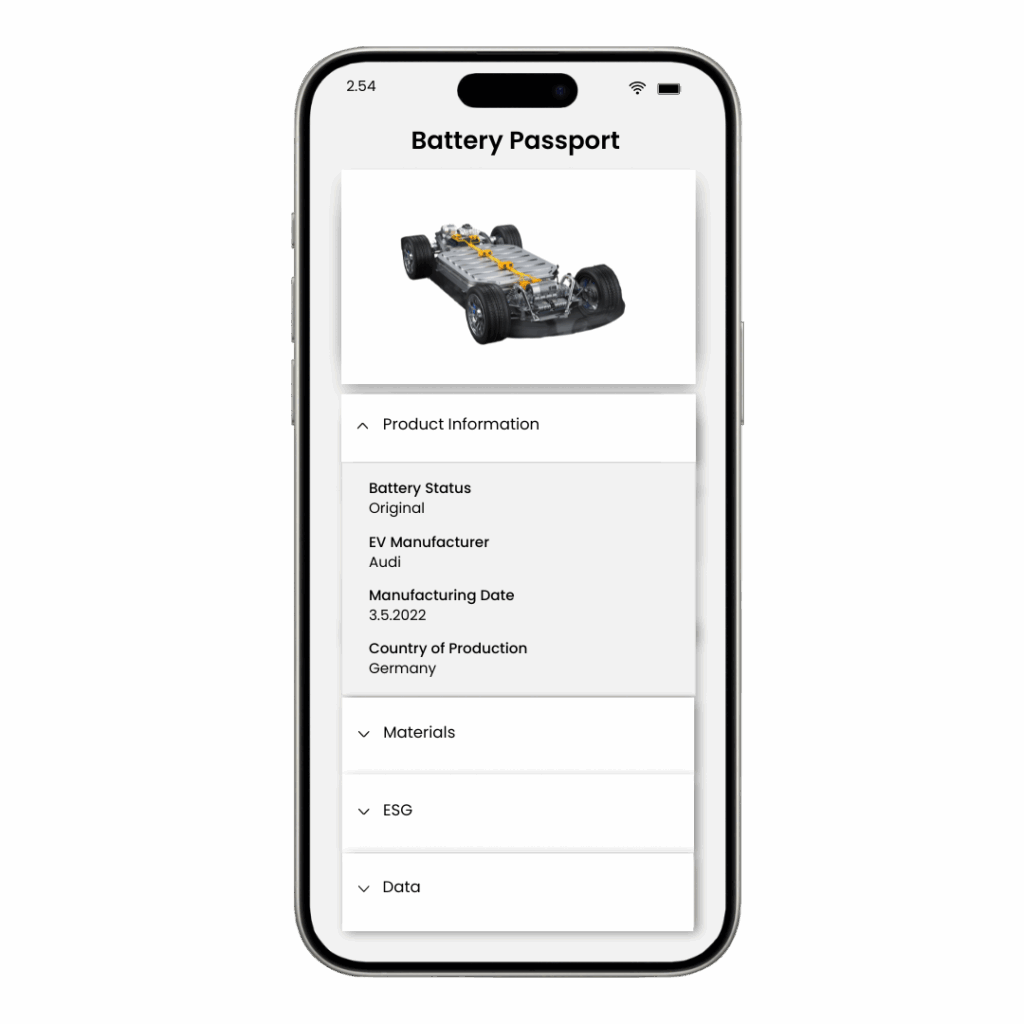
COMPLIANCE AT HAND
Battery Passport vs. Digital Product Passport
The Battery Passport is a sector-specific version of the broader Digital Product Passport. While the DPP will apply across many industries, the Battery Passport focuses on EV, LMT, and industrial batteries, ensuring detailed lifecycle traceability in line with EU requirements.
PSQR provides traceability software designed to handle complex and evolving product data requirements across the battery sector.
We work with customers to help them:
- Capture and structure battery data across stakeholders, formats, and systems
- Ensure data quality, consistency, and accessibility for compliance purposes
- Store product-specific data in alignment with emerging technical specifications
- Exchange traceability data securely while respecting access control and ownership
We are actively following working groups, test implementations, and interoperability discussions—including those led by the BatteryPass project – to ensure our solutions remain informed and adaptable.

What PSQR’s Saga Enables for Battery Passport Readiness
- Structured storage of battery-specific data in alignment with emerging formats and standards
- Multi-stakeholder data integration across manufacturers, suppliers, importers, and recyclers
- Secure access management for sensitive and regulated product data
- Support for serialisation and unique product identifiers to ensure traceability at item level
- Version control and audit trails to track data evolution over the battery lifecycle
- Linking of documentation and technical files (e.g., conformity declarations, due diligence reports)
- Data model flexibility to accommodate future requirements and schema updates
- APIs for automated data exchange with internal systems and external registries
- Support for traceability across materials, components, and subassemblies
- Scalable architecture to handle high volumes of product data and future DPP categories
USING SAGA
Prepare for 2027 With Confidence
With tight timelines, evolving standards, and a dynamic ecosystem, companies need more than just a compliance checklist. They need a data infrastructure that is:
- Interoperable across systems and actors
- Flexible enough to adapt to regulatory changes
- Built for security, transparency, and performance
That’s where PSQR comes in. Our mission is to support your traceability journey, not just to comply, but to lead.